PENGUIN CAFE
Tuesday 11th December - Wednesday 12th - Thursday 13th December
08:00 PM
performed by musicians of the Penguin Cafe Orchestra
Penguin Cafe, the brainchild of the late English composer and multi-instrumentalist Simon Jeffes, play pastoral, playful music that grabs hold of the imagination and the spirit. To mark ten years passing since Jeffes' death, the musicians of the Penguin Cafe Orchestra are getting back together to give two concerts on Tuesday 11, Wednesday 12, and Thursday 13 December at Union Chapel, a venue Simon loved to play.
Tickets: £20 adv + booking fee
Doors Open: 7.00pm
*******************************
UPDATE:
Concert as reviewed by John L. Walters in the Guardian UK.
Showing posts with label review. Show all posts
Showing posts with label review. Show all posts
Wednesday, November 07, 2007


Friday, March 23, 2007
FUTURE CONDITIONAL "WE DON'T JUST DISAPPEAR" (LTMCD 2478)

FUTURE CONDITIONAL
Every once in a while a new pop album comes out that takes hold of you from the first listen, "We Don't Just Disappear" by Future Conditional is one of those albums. I had high hopes already for this disc (so much that I decided to pre-order it) based on the concept and personnel involved. The notion of Glen Johnson and Cedric Pin (of Piano Magic) collaborating on a disc heavily influenced by early OMD, early Human League, Kraftwerk, early New Order and Section 25 circa "From the Hip" was more than enough to keep me intrigued. The album exceeds my highest expectations-- it plays like an unreleased masterwork from Factory Records' heyday. The album starts with a series of 'clicks' reminiscent of the theme to the cursed Scottish television program "The Omega Factor" before becoming an analogue synth charge: "I have trouble holding on, I have trouble staying straight" Dan Matz (of Windsor from the Derby) sings to a singeing-dry electronic beat. It is the perfect opening to an album filled with so many highlights. Angele David-Gillou (of Klima & Piano Magic) sings "You never got over the last girl that kissed you..." on "Crying's What You Need" a track that seems like a perfect rejoinder to New Order's "Perfect Kiss". The album ends with Bobby Wratten (of Field Mice & Trembling Blue Stars) singing on "Your Leaves Me Colder", as if assessing all the stories of love and loss that have come before on the disc, before the beat fully stops and the song ends in a chant:
THE NIGHT IS YOUNG
THE STARS ARE OUT
THE SONGS ARE SUNG
THEY'RE ALL ABOUT
THE BROKEN HEART
THE FINAL KISS
THE ONE WE LOST
THE ONE WE MISSED
If only more songs could haunt me in the same way.
UPDATE: Its now available for download on emusic.
XXXXXXXXXXXXXXXXXXXXXXXXXXXXXXXXXXXXXXXXXXXXXXXXXXXXXXXXXXXXXXXXXXXXXXXXXXXXXXXXXXXXX
from the website:
WE DON'T JUST DISAPPEAR (LTMCD 2478) £10
The debut album (2007) from Future Conditional blends classic analog synth-pop with sleek retro-futurist beats, and features a stellar array of guest vocalists including Melanie Pain (Nouvelle Vague), Bobby Wratten (Field Mice, Trembling Blue Stars), Angele David-Guillou (Klima, Piano Magic), Dan Matz (Windsor For The Derby) and Carolyn Allen (The Wake). As Glen Johnson explains: "Future Conditional isn't just an exercise in nostalgia. We are, in some way paying homage to the groups we love and inspire us, but we're also experimenting with the glacial electro/human emotional interface. The future is a robot with a human heart."
Full tracklist: Bright Lights & Wandering, Broken Robots, We Don't Just Disappear, Switchboard Girl, Substance Fear, Crying's What You Need, The Volunteer, The Last Engineer, Typos, Your Love Leaves Me Colder.
Thursday, February 22, 2007
The Orchids : Good To Be A Stranger

There must be something in the water in Glasgow, it has always been the home to some of the most brilliant pop bands the world has to offer and The Orchids are no exception. After a series of excellent releases on Sarah Records (discussed in full here) which ranged from sugary sweet pop to psychedelic hymns, they quietly disappeared in the Mid-90s. Now they are back with another blissful album. Listening to “Good To Be A Stranger” it immediately occurs to me that they have literally picked up from where they left off. They are still heavily influenced by good Sixties pop tunes. This album feels like a lazy summer day, hanging out on a sunny hillside with friends reminiscing of happy times. The album immediately gets underway with the title track, two minutes of a fast guitar driven warmth bearing the message: “Its good to be back.” Indeed it is. Many of the songs evoke moods inspired by the different aspects of a relationship including love, longing, and departure. Apart from the title track, the songs that really stand out to me at the moment are: “Another Saturday Night”—a chronicle of heading out on the weekend and dancing {Alas, every Saturday night should have this as its soundtrack}, “Down to the Ocean”—about a trip to the seashore, and the closing track “You Could Do Something To Me”—about the resolution of an argument, all perfect subjects for songs as compelling and sunkissed as these. “Good To Be A Stranger” proves the Orchids have not lost their touch for pure jangly pop goodness.
Track Listing:
1. Good To Be A Stranger
2. Take My Hand
3. Xylophone Song
4. I Need You To Believe In Me
5. The Last Thing (On Your Mind)
6. Another Saturday Night
7. Down To The Ocean
8. Feel The Magic
9. Do It For Yourself
10. You Could Do Something TO Me
Due for release on Siesta Records in Early March.
Tuesday, January 02, 2007
Pan's Labyrinth - due in the Boston area soon

Check the ICA Boston's website for notice of an upcoming preview.
Pan's Labyrinth (El Laberinto del Fauno)
Details: 2006, Latin America/Rest of the world/Spain, Drama/Sci-fi/Horror, 112 mins, Dir: Guillermo del Toro, Guillermo del Toro
With: Ariadna Gil, Doug Jones, Ivana Baquero, Maribel Verdu, Sergi Lopez
Summary: At the end of the Spanish civil war, a young girl meets the god Pan, who gives her three challenges.
In the meantime, I refer you to the following reviews. Also of notice is Peter Bradshaw's review along with Mark Kermode's comment in the Guardian UK, where you can also see director Guillermo del Toro's sketches -- full details along with an interview are here.
The official website for the film is here.
Needless to say, I am excited.
XXXXXXXXXXXXXXXXXXXXXXXXXXXXXXXXXXXXXXXXXXXXXXXXXXXXXXXXXXXXXXXXXXXXXXXXXXXXXXXXXXXXX
Also of interest is Anthony Lane's latest piece in the New Yorker, reviewing Pan's Labyrinth and Children of Men.
UPDATE:::
Finally, a full review by Jonathan Rosenbaum of these two exceptional films.
Thursday, December 14, 2006
Jay-Jay Johanson - The Long Term Physical Effects Are Not Yet Known


Jay-Jay Johanson
THE LONG TERM PHYSICAL EFFECTS ARE NOT YET KNOWN
1. She Doesn't Live Here Anymore
2. Time Will Show Me
3. Coffin
4. Rocks in Pockets
5. As Good As It Gets
6. Only For You
7. Jay-Jay Johanson Again
8. Breaking Glass
9. New Year's Eve
10. Tell Me When The Party's Over / Prequiem
11. Peculiar
The new work from Swedish crooner, Jay-Jay Johanson, is a welcome return to form. The premise here is loss and isolation. There is a rough aspect to all the songs that make this his most coherent album since Poison. This album is full of the fear and despair one feels in the absence of a loved one. Where Poison drew on elements of rock, electronica and hip-hop, the new album's closest references are jazz and movie soundtracks. Jay-Jay's new album has a very European-style cinematic feel, notions of Francois de Roubaix, Michel Legrand and Philippe Sarde's darker work are evoked. Jay-Jay was inspired to sing from listening to Chet Baker, then later the sound and success Portishead achieved provide two touchstones for his work.
The first song "She doesn't live here anymore", sets the tone for the rest of the album as it opens with the rhythmic sound of bells before a slow percussive march and John Barry-style bass guitar kicks in. The song chronicles a man's withdrawal and regression from society. It is breathtaking in its litany of despair. From this point on, a good part of the disc feels like the mental state of this man. "Time will show me" starts with a noisy Hammond organ sound before lapsing into a meditation on this period of separation. The next track "Coffin", one of the quieter songs, seems to take up the story from where the song "Escape" on the album Poison left off – he now contemplates digging a grave for himself as everything he does in life makes him feel worse. The mood changes slightly with "Rocks in Pockets". (rumored to be the next single) It is one of the more fully cinematic pieces. It starts with this bouncy, percussive beat and ominous strings which lay down a dense, atmospheric bed of sound, setting the scene for what is to come. Jay-Jay's voice rises above it all: 'Pack your bags – Keep it Quiet" – the first lines hang in the air and move on, barely having time to settle before the scene quickly shifts. This is a song of movement, it chronicles the thrill (and desire) of an escape. Most of the lyrics start with verbs, placing the motion of the journey on the ears of the listener. It is the story of two people who leave home on a mysterious mission. The song feels reminiscent of a dark thriller or possibly Alain Tanner's film "Messidor"—a destructive and desperate sense pervades the atmosphere. Following this, the mood turns light, and almost jazzy with "As Good As It Gets", perhaps the happiest song on the disc. It talks of memories of childhood, of being pushed from a great height and surviving. What could have ended in death becomes a recognition of life pushing one onwards. "Only For You" is quieter as its story gets darker, a person suppressing himself and his identity in order to prove his love. "Jay-Jay Johanson Again" is a wry tune about Jay-Jay's thoughts as he performs for the audience (it ends with the genius lines "look in my eyes, you'll recognize: Jay-Jay Johanson"). "Breaking Glass" (not a David Bowie cover) is another quieter track, that expresses the need to 'forget the past', musically it's interesting, he sings over a percussive beat formed by his own breath. "New Year's Eve" again talks of the absence and longing for a former love around that time of year, it is one of the saddest tracks I've heard on the subject. It is also perhaps the most real, as it address the loneliness many people commonly feel around that time. "Tell me when the party's over" is another quieter tune that slowly fades away into the brief coda that is "Prequiem"—a piece that ends with the sound of strings and helicopters. The final track on the album, "Peculiar", is almost like Jay-Jay Johanson does Tom Jobim, it has this odd bossa nova type quality to it. Jay-Jay sings about a girl called Peculiar—it's a funny little song and an irreverent ending to an album that is so moody.
Tuesday, October 03, 2006
James Tiptree, Jr.: The Double Life of Alice B. Sheldon by Julie Phillips

At the end of the summer, I finished reading Julie Phillips's excellent biography of Alice Sheldon's life. I remember being fascinated by some of her late work, stories collected in "Tales of the Quintana Roo", when I was younger. At the time, I didn't know that James Tiptree, Jr. was actually the pen name of Alice B. Sheldon, I only felt that in reading her stories, I connected with a very intelligent mind. Julie Phillips' biography of Alice's fascinating life is recommended to any reader who is excited by a person filled with boundless curiosity. It is certainly not strictly for Science Fiction readers-- the book doesn't get to the actually stories until its final third. Alice did not start writing as Tiptree until she was 51 years old. She was born to an author Mother and an attorney Father, who invested wisely in real estate in Chicago. Her family's wealth led them to go on Safari-- Alice's first Safari took place when she was six years old. The wonder and devastation she saw there marked her life forever. By the time she was 11, she had already traveled extensively in Africa during three different Safaris. This kind of exposure to other parts of the world transformed her experience of 'ordinary' American life. She certainly could not relate to other children her age-- Phillips describes a scene where Alice's elementary school teacher is discussing Africa and cannot get Alice to sit still because she had already been there. Experiences like this provoked her and frustrated her formative years. She was also marked throughout her life by her Mother's success in writing stories for national magazines and books. Alice later went on to join the Women's Army Corps, where she-- taking a little initiative-- ended up in military intelligence by the end of World War Two. This job later became part of a new government agency after the war--the CIA. She stuck with it for three years and then left to pursue writing. Her husband worked for the Agency for the rest of his life. All of these experiences were later drawn upon to create the persona of James Tiptree, Jr. The stories by James Tiptree, Jr. are fascinating as they have an inherent skepticism regarding the nature of human progress. Phillips constantly reminds the reader at the end of most chapters how Alice's memories contributed to the substance of her stories, and how Alice's own reality exposed her larger psychological problems. Alice witnessed first hand how the United States treated women as second class citizens after World War Two. This experience made her cynically view later feminist movements in the 1970s. Throughout her life she was a witness to human violence and cruelty, whether it was in colonial Africa or in the United States of America. All of this fed into her Science Fiction stories. Tiptree was something that started as a joke for her and then became almost an emotional release at times. She was able to correspond with so many fans, publishers and other authors under this persona, that Tiptree literally provided her with a second life. Tiptree was an elaborate game for her; his actions helped her through so many depressive moods. Unfortunately, the game only led so far, by the end of the 1970s Alice was taking numerous prescription drugs and was addicted to Dexadrine (something that started when she worked for the CIA). Her quick mind could only see one way out and she entered into a death pact with her husband. Finally in 1987, she shot her husband as he slept then herself. At that point she could not deal with growing old and losing her sensibilities in a world that grew colder. Julie Phillips new biography illuminates through a thorough study of all of Alice's stories and correspondence the life of a truly remarkable woman.
For a more detailed look at this biography, I highly recommend Carter Scholz's review of it in Bookforum.
Stories:
The Screwfly Solutionby Raccoona Sheldon
Beam Us Home by James Tiptree, Jr.
The Women Men Don't See by James Tiptree, Jr.
suggested links:
The official site of Julie Phillips regarding the book in question, author interviews, excerpts, praise etc.
The Tiptree Award
Congo Journey - John le Carré writing in the Nation
Fantastic Fiction Uk bio
Publisher of "Her Smoke Rose Up Forever" tachyon
Alice's professor at Sarah Lawrence College and life long friend Rudolf Arnheim
Monday, September 04, 2006
The Seducer (Forføreren) by Jan Kjærstad

The Seducer (Forføreren) by Norwegian author, Jan Kjærstad, was finally published in English translation in the United States this summer. It is the first book in a trilogy of his that was originally written in the mid-1990s. The book concerns the activities of television documentary producer, Jonas Wergeland. It positions itself as somewhere in between biography and fiction, or at least, that's the book's primary conceit as its language and methods exist wholly in the territory of fiction. However, the enormous presence of all the characters in the book lend it to the idea of biography, they are vivid and many times larger than life. In the beginning, in a chapter called "The Big Bang", the one event that starts the book's mechanism occurs, Jonas comes home after working on his television programme abroad, Jonas comes to his apartment in Oslo to find his wife dead on their living room floor. It is from this event that Jonas Wergeland's universe is blown apart. The book from here on in consists of past reflections, memories of childhood, family interactions, and sexual encounters in his life. These events are bracketed by chapters dealing with the subject's television programme "Thinking Big", a documentary series that focusses on an event in a famous Norwegian's life (such as Ole Bull, Fridtjof Nansen, Gustav Vigeland, Armauer Hansen, Per Spook and Knut Hamsun) and uses this to ruminate upon Norway's place in the world; it looks at the world through the prism of Norway. The seemingly omniscient narrator (and as yet, unknown) is quite critical of Norwegian life and has some startling insight into contempoary history. If you know very little of the History of Norway, The Seducer is certainly a fun and exciting way to educate oneself. It is a book full of active learning and responses to contempoary and past events. As Jonas drifts into his past, considering who could have been responsible for his wife's grisly end, his actions speak to the reader as the sign of a man with an active imagination, one who is able to examine history by his sheer contrary stance to it. Time and again, Jonas' life is marked by his conscious decision to be different, to shake things up by doing things contrary to the zeitgeist. It is usually during these moments that the narrator is able to make comments about the single-mindedness of Norwegian culture and its resistence to certain kinds of change. I found these moments of the book quite fascinating. This is not to say that the book is all history and politics-- it is the tale of a Seducer, after all. Jonas Weregeland is a seducer of the Norwegian public in watching and loving his programme and he is also a lover of women. That is to say he is the great lover of women, he does nothing to entice them to stay with him, he merely has to look in their direction, they sense his presence and must have him. This is the way numerous sexual events are described during his adolescence. Jonas is able to have intimate knowledge with the most wonderful and bizzare women (each with last name abbreviated), who in later years become experts in their fields and great champions of Norway. All of these events form a mosaic in the life of a man, a man who is bound up in his identity as a Norwegian and as a citizen of the world, at the same time that he sets himself apart from his homeland, he also illustrates that he can never escape it. This book is a charming and exciting read from start to finish. Jan Kjærstad is an author of enormous skill, his tale of Jonas Wergeland raises many questions, it makes me thirst for the second book in the trilogy.
Further information:
the Complete Review
Odin Trends in Contemporary Norwegian Literature
Publisher's information:
Overlook Press
H. Aschehoug & Co
Arcadia Books
Monday, August 28, 2006
Martial Canterel
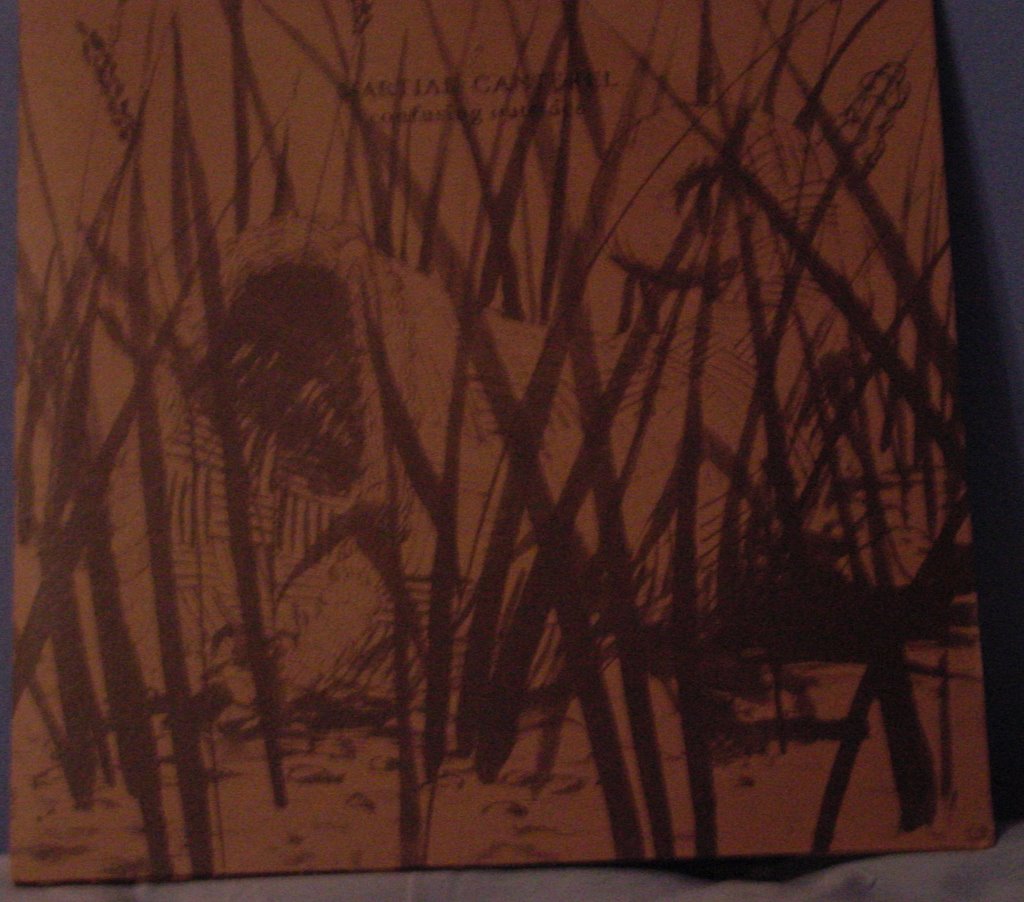
 Martial Canterel is my friend Sean McBride's electronic project. The album "Confusing Outsides" may have been described on the genetic music website as sounding like "The Wake without guitars". Or perhaps this is how I remember it, at any rate, this description is fairly accurate, it also reminds one of early Human League and Section 25, that is to say, definately like something coming out of Northern England and Northern Europe in the late '70s early 80s. It is appropriate that Martial Canterel is labelmates with Skanfrom aka sleeparchive, (interview with Sleeparchive here) both have an affinity for making music which references and uses original (vintage) equipment to produce solid, fat, chunky analogy synth sounds. Some of the songs also remind me of Mark Van Hoen's solo work and his Locust project. I started playing Martial Canterel's work since first hearing about it in 2004. It was kind of a pain to track down as I had to order it directly from the Belgian distributor flexx. Needless to say, it was definately worth the effort. If you really like older synth sounds combined with narratives about the emptiness of modern life, I suggest you immediately track down Martial Canterel's work.
Check out Martial Canterel's official site.

Wednesday, January 04, 2006
The Montgolfier Brothers - All My Bad Thoughts
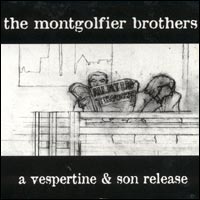
The Montgolfier Brothers - "All My Bad Thoughts"
RPM Quigley and Mark Tranmer are back with a new work, "All My Bad Thoughts", which brings them back into familiar territory. This is a stunning meditation on infidelity and existence. The album unfolds over the course of ten tracks, telling the end of a relationship, dwelling on the period after it, reassessing life as it becomes precious. There is a specific pattern, a specific course of events here that charts the free fall of an aggressor. The album begins with RPM Quigley's rich voice, recalling wet Northern English days, as he narrates the tale of a man who is not 'cheating' but rather, 'seeing someone else' in the song "The First Rumors of Spring". All the songs recall memories of a former lover, as the person's absence becomes more palpable, more of an albatross around our hero's neck. Constant apologies mixed with pure hate are the order of the day early in the album. Songs like "don't get upset if i..." and "all my bad thoughts", show a wretched, insufferable side to our hero. A light instrumental track, "stopping for breath" gives us a few moments to reflect on what has happened before diving into the much more contemplative final five songs.
The latter half of the album is composed on longer meditations of time and memory. The narrator remembers stories of childhood and is awakened by the contemplative nature of the surrounding architecture. The song "Koffee Pot" calls for 'drowning your sorrow in damp tea, while telling your problems to the window' (a different version of which can be heard on the Journey's End EP), while "brecht's lost waltz / summer is over" is a bizarre waltz filled with dirty ideas and regretful incidents.
The Montgolfier Brothers latest effort works well as a whole, as it chronicles the moments in the life of a modern romantic hero with musical echos of Wim Mertens and the Durutti Column, as well as the literary touch of J.P. Donleavy.
+++++++++++++++++++++++++++++++++++++++++++++++++++++++++++++++++++++++++++++++++
Interview with RPM Quigley by BBC Manchester
+++++++++++++++++++++++++++++++++++++++++++++++++++++++++++++++++++++++++++++++++
all my bad thoughts
(10 track cd album)
the first rumours of spring
don't get upset if i ...
all my bad thoughts
sins and omissions
stopping for breath
koffee pot
brecht's lost waltz / summer is over
quite an adventure
journey's end
it's over, it's ended, it's finished, it's done.
Vespertine and Son.
+++++++++++++++++++++++++++++++++++++++++++++++++++++++++++++++++++++++++++++++++++
The Montgolfier Brothers will also be on tour in Spain shortly:
Spanish Tour * january 2006
wed 18th castellon, teatro del raval
thu 19th tarragona, sala zero
fri 20th lleida, cafe del teatro
sat 21st madrid, cafe la palma
sun 22nd barcelona, sala apolo
mon 23rd zaragoza FNAC, plaza de espana
tue 24th guadalajara, teatro buero vallejo
wed 25th conciertos de radio 3 (tv recording)
thu 26th el puerto de santa maria (cadiz), sala poniente
fri 27th seville fun club
sat 28th granada, tbc
(most dates shared with southern arts society and the otto show)
Sunday, December 11, 2005
The Orchids - A Look Back.
For cracking good pop you can't do much better than the Orchids. The classic Sarah Records band has finally come back into the picture for Act II. James Neiss's Les Temps Moderne (LTM) label just reissued all of their old releases. It is so good to hear their songs on CD with all of their non-album tracks in one place. The Orchids started in Glasgow in the mid-eighties-- dire years for any kind of independent pop. They were heavily influenced by other Scottish favorites like Josef K, Orange Juice, the Go-Betweens, essentially the Postcard Records stable of bands, as well as early Primal Scream. One touchstone band for The Orchids was the Wake, which was on Factory Records and later Sarah Records as well.
Their mini-album LYCEUM, here re-issued with early singles as bonus tracks-- including the songs from Bob Stanley's Caff label, is eight pitch-perfect songs of pure indiepop bliss. From the brilliant opening of "It's Only Obvious" with James Hackett's strident vocals to the ecstatic joy of "Caveman" with its oblique political references, and the genius chorus of "The York Song", this disc will put you in a happy mood. The bonus tracks available include the pure pop of "I've got a habit"-- with the line "I'm drinking Iron-Bru and I'm thinking of you", the song "Apologies" with its "Sha-la-la yeah" chorus, as well as an anti-poll tax song, "Defy the Law". This disc is a solid purchase for jangly indiepop lovers of all kinds.
Up next is UNHOLY SOUL + SINGLES, it sees the band experimenting more with synthesizers and samplers on occasion, getting more into echoing the finer points of Sixties pop. A few of the tracks also have the soulful vocal talents of Pauline Hynds, this is the disc that has "Peaches"-- with Pauline singing "Get yourself high, feed your soul, set yourself free", one of the tracks that introduced me to the Orchids as it also appears on the Sarah 100 compilation "There and Back Again Lane". The Orchids are clearly moving towards a more psychedelic sound, as the influence of Madchester tends to leak in on UNHOLY SOUL. This is also evident on the wonderful paring of "The Sadness of Sex (Pt 1)" with its dirty guitar and whistled chorus and "Waiting for the Storm", the latter being a nearly 8 minute epic of programmed beats and samples-- it nearly feels like Coldcut's remix of Eric B and Rakim's "Paid in Full". This album oscillates between jangly Sixties pop and electro pop that at first blush may seem slightly incongruous but really works as a whole the more you listen to it.
Their final album was STRIVING FOR THE LAZY PERFECTION, released here with their Thaumaturgy single plus some demo tracks. Their experiments going forward and backward that came through in UNHOLY SOUL are further magnified in this release. It opens with the noisy guitar of "Obsession No. 1" and moves to the programmed bliss of "Striving for the Lazy Perfection", finally nearing an end with the haunting "I've got to wake up to tell you my dreams" then sliding into "the Perfect Reprise" with its recollection of the earlier track. Pauline Hynds also appears on this album to bring a feminine touch to a handful of songs. This disc has its jangly songs like "The Searching" and "Welcome to my Curious Heart" but it primarily leans toward electronic pop. The classic track "A Kind of Eden" is here, which was the Orchids' contribution to Elefant Records MONTECARLO compilation. My favorite track on this disc has to be the pretty electro-pop of "Avignon", which contains a sample that was also used on Acuarela Records' mainstays Emak Bakia's second album "Despues". The electro tracks on this disc also remind me of a pop-friendly Ultramarine.
Too many good songs are on each of these releases to do without one. LYCEUM provides a good introduction and will please any lover of good lo-fi pop, UNHOLY SOUL builds on the earlier template with more instrumentation and female vocals, STRIVING FOR THE LAZY PERFECTION further carries these experiments out to a heavenly conclusion. I've been told that the band has reformed and is currently working on new material. With a potential release in 2006, LTM's reissues provide the perfect refresher course for one of the most overlooked and consistently excellent indiepop bands out there.
+++++++++++++++++++++++++++
LYCEUM + SINGLES LTMCD 2442
66 minutes, features the 1989 mini album Lyceum plus their early singles.
Full tracklist: It's Only Obvious, A Place Called Home, Caveman, The York Song, Carrole-Anne, Hold On, Blue Light, If You Can't Find Love, + I've Got a Habit, Apologies, Give Me Some Peppermint Freedom, Defy the Law, Underneath the Window Underneath the Sink, Tiny Words, Walter, What Will We Do Next, As Time Goes By, Yawn, An Ill Wind that Blows, All Those Things.
UNHOLY SOUL + SINGLES LTMCD 2445
70 minutes, Originally released in 1991.
Full tracklist: Me and the Black and White Dream, Women Priests and Addicts, Bringing You the Love, Frank De Salvo, Long Drawn Sunday Night, Peaches, Dirty Clothing, Moon Lullaby, Coloured Stone, The Sadness of Sex (Pt 1), Waiting for the Storm, You Know I'm Fine, + Bemused, Confused and Bedraggled, Pelican Blonde, Tropical Fishbowl, How Does That Feel, Sigh, Something for the Longing, Farewell Dear Bonnie, On a Sunday.
STRIVING FOR THE LAZY PERFECTION + SINGLES LTMCD 2451
67 minutes (18 tracks) Originally released in 1994, The five bonus tracks are culled from the 1992 single Thaumaturgy plus demo tracks.
Full tracklist: Obsession No. 1, Striving for the Lazy Perfection,The Searching, Welcome to my Curious Heart, Avignon, A Living Ken and Barbie, Beautiful Liar, A Kind of Eden, Prayers to St Jude, Lovechild, Give a Little Honey, I've Got to Wake Up to Tell You My Dreams, The Perfect Reprise,+ Thaumaturgy, I Was Just Dreaming, Between Sleeping and Waking, It's Ours, The Letter.
Their mini-album LYCEUM, here re-issued with early singles as bonus tracks-- including the songs from Bob Stanley's Caff label, is eight pitch-perfect songs of pure indiepop bliss. From the brilliant opening of "It's Only Obvious" with James Hackett's strident vocals to the ecstatic joy of "Caveman" with its oblique political references, and the genius chorus of "The York Song", this disc will put you in a happy mood. The bonus tracks available include the pure pop of "I've got a habit"-- with the line "I'm drinking Iron-Bru and I'm thinking of you", the song "Apologies" with its "Sha-la-la yeah" chorus, as well as an anti-poll tax song, "Defy the Law". This disc is a solid purchase for jangly indiepop lovers of all kinds.
Up next is UNHOLY SOUL + SINGLES, it sees the band experimenting more with synthesizers and samplers on occasion, getting more into echoing the finer points of Sixties pop. A few of the tracks also have the soulful vocal talents of Pauline Hynds, this is the disc that has "Peaches"-- with Pauline singing "Get yourself high, feed your soul, set yourself free", one of the tracks that introduced me to the Orchids as it also appears on the Sarah 100 compilation "There and Back Again Lane". The Orchids are clearly moving towards a more psychedelic sound, as the influence of Madchester tends to leak in on UNHOLY SOUL. This is also evident on the wonderful paring of "The Sadness of Sex (Pt 1)" with its dirty guitar and whistled chorus and "Waiting for the Storm", the latter being a nearly 8 minute epic of programmed beats and samples-- it nearly feels like Coldcut's remix of Eric B and Rakim's "Paid in Full". This album oscillates between jangly Sixties pop and electro pop that at first blush may seem slightly incongruous but really works as a whole the more you listen to it.
Their final album was STRIVING FOR THE LAZY PERFECTION, released here with their Thaumaturgy single plus some demo tracks. Their experiments going forward and backward that came through in UNHOLY SOUL are further magnified in this release. It opens with the noisy guitar of "Obsession No. 1" and moves to the programmed bliss of "Striving for the Lazy Perfection", finally nearing an end with the haunting "I've got to wake up to tell you my dreams" then sliding into "the Perfect Reprise" with its recollection of the earlier track. Pauline Hynds also appears on this album to bring a feminine touch to a handful of songs. This disc has its jangly songs like "The Searching" and "Welcome to my Curious Heart" but it primarily leans toward electronic pop. The classic track "A Kind of Eden" is here, which was the Orchids' contribution to Elefant Records MONTECARLO compilation. My favorite track on this disc has to be the pretty electro-pop of "Avignon", which contains a sample that was also used on Acuarela Records' mainstays Emak Bakia's second album "Despues". The electro tracks on this disc also remind me of a pop-friendly Ultramarine.
Too many good songs are on each of these releases to do without one. LYCEUM provides a good introduction and will please any lover of good lo-fi pop, UNHOLY SOUL builds on the earlier template with more instrumentation and female vocals, STRIVING FOR THE LAZY PERFECTION further carries these experiments out to a heavenly conclusion. I've been told that the band has reformed and is currently working on new material. With a potential release in 2006, LTM's reissues provide the perfect refresher course for one of the most overlooked and consistently excellent indiepop bands out there.
+++++++++++++++++++++++++++
LYCEUM + SINGLES LTMCD 2442
66 minutes, features the 1989 mini album Lyceum plus their early singles.
Full tracklist: It's Only Obvious, A Place Called Home, Caveman, The York Song, Carrole-Anne, Hold On, Blue Light, If You Can't Find Love, + I've Got a Habit, Apologies, Give Me Some Peppermint Freedom, Defy the Law, Underneath the Window Underneath the Sink, Tiny Words, Walter, What Will We Do Next, As Time Goes By, Yawn, An Ill Wind that Blows, All Those Things.
UNHOLY SOUL + SINGLES LTMCD 2445
70 minutes, Originally released in 1991.
Full tracklist: Me and the Black and White Dream, Women Priests and Addicts, Bringing You the Love, Frank De Salvo, Long Drawn Sunday Night, Peaches, Dirty Clothing, Moon Lullaby, Coloured Stone, The Sadness of Sex (Pt 1), Waiting for the Storm, You Know I'm Fine, + Bemused, Confused and Bedraggled, Pelican Blonde, Tropical Fishbowl, How Does That Feel, Sigh, Something for the Longing, Farewell Dear Bonnie, On a Sunday.
STRIVING FOR THE LAZY PERFECTION + SINGLES LTMCD 2451
67 minutes (18 tracks) Originally released in 1994, The five bonus tracks are culled from the 1992 single Thaumaturgy plus demo tracks.
Full tracklist: Obsession No. 1, Striving for the Lazy Perfection,The Searching, Welcome to my Curious Heart, Avignon, A Living Ken and Barbie, Beautiful Liar, A Kind of Eden, Prayers to St Jude, Lovechild, Give a Little Honey, I've Got to Wake Up to Tell You My Dreams, The Perfect Reprise,+ Thaumaturgy, I Was Just Dreaming, Between Sleeping and Waking, It's Ours, The Letter.
Sunday, November 27, 2005
Journey's End EP - The Montgolfier Brothers

The Montgolfier Brothers - Journey's End EP (Vespertine and Son, 2005)
This latest release from Manchester, England-based group, the Montgolfier Brothers, heralds a true return to form. The Montgolfier Brothers is the brainchild of Mark Tranmer, who also records as GNAC, and RPM Quigley, otherwise known as 'At Swim Two Birds' or simply 'Quigley'. This is their first release of new material since "the World is Flat", which was released on Alan McGee's London-based Poptones label, this is also their first release on the recent "Vespertine and Son" label. Musically, they have always been inspired by the quieter aspects of work by French film soundtrack composers such as Francois de Roubaix, Michel Legrand and Philippe Sarde. Being from the Manchester area, the work is also heavily influenced by the heyday of such independent labels as Factory Records (longtime home of the another influence, the Durutti Column) and Les Disques du Crepuscule, the Montgolfier Brother's sound being more akin to the latter than the former in many respects.
The Journey's End EP opens with dense organ lines then minimal acoustic piano taking over the central theme, representing the steady march of time, a reflection on the loss of a dear friend. RPM Quigley's trembling, Manchester-inflected accent bringing a distinct Northern quality to the emotional content of the song. Journey's End is filled with vivid impressions of memory and existence, it focusses less on evoking the past, then the feeling of absence itself. It is a song that strikes the perfect tone for reminisence, never approaching the maudlin or bathetic. The second track, Bridestones Revisited, which comes across as rather similar to GNAC as if rewritten for a chamber ensemble, the sound is developed and expanded upon. It begins in a nearly baroque manner with organ and the occasional flute, with a clear emphasis on woodwinds primarily, the opening into echoes of guitar and piano. The third track, Koffee Pot Blues, retains the quiet mood of Journey's End, as it builds on a theme introduced by organ and flute, with a hint of Tuba and French Horn in the distance-- as if in remembrance or regret. A cello begins to play, driving the piece forward, with an acoustic piano finally picking up the main theme. However, it isn't until an electric guitar comes into focus that I recognize this theme as originating in Journey's End, the opening track. It is a march of sorts, an invitation to a journey. RPM Quigley sings "Sit and tell your problems to the Window, drown them in the sweet and stagnant tea.." It is an invocation for contemplation of time past. Again, he tells us "Always time for open-ended journeys, cast unintended looks at passers by..." He refers to the memories constructed by faded urban spaces. The distant history imbued in city life. This is a more poetic piece than Journey's End, as it it told through the production of concrete images, calling upon the senses to release memory. The EP ends with Koffee Pot Brass, a shorter version of Koffee Pot Blues, it begins with a harp-like sound, then ominous use of an organ in the foreground, meant to inscribe a solemn brass band, perhaps playing at a military funeral or some such affair. In many, was this is a denser version of 'Koffee Pot Blues' as RPM Quigley's vocals start almost immediately and use of the harp acts to emphasize an etheral quality inherent in his vocals.
For sheer consistency in mood and design, look no further than the Montgolfier Brothers to conjure heartfelt moments for rainy days. This is a perfectly composed EP. I cannot wait to hear the album.
www.vespertineandson.com
Journey's End 8:09
Bridestones Revisited 3:57
Koffee Pot Blues 9:55
Koffee Pot Brass 4:37
Thursday, November 03, 2005
Busy Week - the end of the 30th year
It has been a moderately busy week at work so I haven't had time to finish any detailed posts lately. As far as I know I will have my current radio show back again tomorrow night from 7-10pm on WZBC.
 Recently, I finished reading a first edition of Martin Esslin's book on the Theatre of the Absurd (cover depicted above is of the most recent edition). What's interesting about him is that he studied in Austria and then went to live in England during WWII. During the war he became a radio programmer for the BBC's European Service. This ties in to his general theories of the Theater of the Absurd by applying its principles not only to the stage but also to radio. Some of the authors mentioned solely created works that are meant to be heard, and not seen. The atmosphere and general concepts deriving from this use of the radio reminds me of certain horror films where the best thing about them is the sound design. The slight exception to this is Robert Wise's "The Haunting", which is well known for its excellent sound design, because it is supported by a strong story and cast.
 In other news, I purchased David Sylvian's recent project NINE HORSES. It is his collaboration with burnt friedman, Steve Jansen and others (including Ryuichi Sakamoto and Stina Nordenstam). I haven't had time to listen to all of it but most of what I've heard is in a uniquely pop vein.
The other bit of music news I have concerns two new releases on Montreal-based label intr_version. Désormais has a new album out called "Dead Letters to Lost Friends" and Avia Gardner's new album is out called "More Than Tongue Can Tell". This is exciting news, expect to hear me feature these releases on my radio show in the coming weeks.
The last bit of their copy reads like this:
désormais is playing in montreal at zoobizarre, tuesday, november 8th (6388 st-hubert, www.zoobizarre.org). they (we) will be accompanying chicago's voltage. death from above 1979 for those who are way past vice? hella for the ladies? anyone? http:// www.flameshovel.com/voltage.php - you decide.
The last bit is for the local people. I'm nearly approching my thirtieth birthday (November 8). Hopefully the weather will cooperate this weekend.
Say 'hello'.
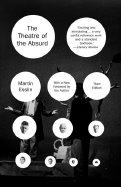 Recently, I finished reading a first edition of Martin Esslin's book on the Theatre of the Absurd (cover depicted above is of the most recent edition). What's interesting about him is that he studied in Austria and then went to live in England during WWII. During the war he became a radio programmer for the BBC's European Service. This ties in to his general theories of the Theater of the Absurd by applying its principles not only to the stage but also to radio. Some of the authors mentioned solely created works that are meant to be heard, and not seen. The atmosphere and general concepts deriving from this use of the radio reminds me of certain horror films where the best thing about them is the sound design. The slight exception to this is Robert Wise's "The Haunting", which is well known for its excellent sound design, because it is supported by a strong story and cast.
 In other news, I purchased David Sylvian's recent project NINE HORSES. It is his collaboration with burnt friedman, Steve Jansen and others (including Ryuichi Sakamoto and Stina Nordenstam). I haven't had time to listen to all of it but most of what I've heard is in a uniquely pop vein.
The other bit of music news I have concerns two new releases on Montreal-based label intr_version. Désormais has a new album out called "Dead Letters to Lost Friends" and Avia Gardner's new album is out called "More Than Tongue Can Tell". This is exciting news, expect to hear me feature these releases on my radio show in the coming weeks.
The last bit of their copy reads like this:
désormais is playing in montreal at zoobizarre, tuesday, november 8th (6388 st-hubert, www.zoobizarre.org). they (we) will be accompanying chicago's voltage. death from above 1979 for those who are way past vice? hella for the ladies? anyone? http:// www.flameshovel.com/voltage.php - you decide.
The last bit is for the local people. I'm nearly approching my thirtieth birthday (November 8). Hopefully the weather will cooperate this weekend.
Say 'hello'.
Tuesday, October 18, 2005
The Passenger (Professione: Reporter)

The best of Michelangelo Antonioni's English-language films is finally seeing the light of day. Apparently a new distributor has rights to the film. The first time I saw this masterpiece was in the mid-1990s in Brussels, Belgium, under its original title "Profession: Reporter". Marxist Film Theorist, Peter Wollen, wrote the screenplay, based on Mark Peploe's story. Searing stuff about loss of identity, the media and gun running. It is a somber tale of a man who's life falls apart. The film starts in Northern Africa, with flash backs to Germany and London, then its second-half filled with beautiful landscapes of Northern Spain, and Gaudi's park in Barcelona.
This film has been next to impossible to see and/or acquire in North America as distribution here was embroiled in some kind of legal hold up. (If anyone knows the inside story on this, I'm all ears. Perhaps it had to do with the sex scenes between Jack Nicholson and Maria Schneider?)
The film is an utterly sublime statement on the decay of modern life.
It is one of my favorite films period.
++++++++++
The copy from the link above reads:
The last, and in many people's opinion the best, of the three English language films made by Antonioni for MGM release, The Passenger has been out of circulation for many years and was not available for the National Film Theatre's recent Antonioni season. This newly-restored print, however - from new owners Sony - is well worth the extra wait, not least because it is Antonioni's original cut, previously unseen. The script offers up a story which is almost Hitchcockian, but of a kind adaptable to Antonioni's very different metaphysic. David Locke, a journalist, impulsively decides to take over the identity (or at least the passport and diary) of a stranger called Robertson who has mysteriously died in a shared hotel room somewhere in Saharan Africa. Following Robertson's itinerary, he meets up with a girl (the 'passenger' of the English title) and the pair are pursued across Europe by the police and some shadowy Africans for whom Robertson had been a gun runner. Characteristic Antonioni themes, such as the instability of identity and the fragility of relationships, are explored with unparalleled subtlety, and the film's finale is simply sublime - spectacular as in Zabriskie Point and emotionally intense as in L'avventura or The Eclipse.
Geoffrey Nowell-Smith
Directed by Michelangelo Antonioni
Written by Mark Peploe, Peter Wollen
With Jack Nicholson, Maria Schneider, Jenny Runacre
Country Italy-France-Spain
Year of Production 1975
Running Time 125 minutes
Sponsored by TCM
Monday, September 26, 2005
Cronenberg, Morentsen, Bello, Harris, Hurt...A History of Violence
Briefly: David Cronenberg's latest film "A History of Violence" is one of the best pieces of filmmaking I've seen in a while. It works well on so many levels as it deals with a social problem. The film itself is lean, there is no excess fat, everthing included is necessary to the story. Questions less of identity and more about social justice, and by extension commerce come into play. Also of note, the film was shot entirely in Canada. It is primarily set in a small town in Indiana, but it could be any middle class small town, not precisely in the U.S.A. either. Having said that, it still seems that the film is critiqing certain American ideals. Also of note is the violent inserts, during the cafe scene a man's jaw is shot off, this is to indicate the consequences of that violence, not to revel in it. The only antecedent to something of this type I can immediately think of is photographs of soliders in military hospitals during World War I (yes, its that graphic). The other point that a number of reviewers have made are the two sex scenes, one very gentle and the other quite rough, contrasting two sides of the same characters. The entire cast was very strong and the pacing just right for a film that addresses some tough social issues.
The team behind this film have been doing a number of press interviews, one with the director was recently printed in the Boston Globe, Maria Bello in the Montreal Mirror, and Viggo Morentsen was recently on Charlie Rose giving an excellent diagnosis of the current state of affairs in the U.S.A.
The team behind this film have been doing a number of press interviews, one with the director was recently printed in the Boston Globe, Maria Bello in the Montreal Mirror, and Viggo Morentsen was recently on Charlie Rose giving an excellent diagnosis of the current state of affairs in the U.S.A.
Thursday, September 15, 2005
Hitchens v Galloway - the report from our man in Brooklyn
Tom Gilmore reports on the debate between Christopher Hitchens and George Galloway.
"I was sitting front row in the balcony and had a pretty good bird's
eye view of what they called 'The Grapple in the Apple.'
It was very lively, as I think everyone expected it would be. The
crowd seemed very evenly split in who they supported and, as things
like this go, nobody was there to have their mind changed. Rather,
they were there to see their side supported by the most colorful and
passionate mouth-piece for their views. Strong points from both men
were always greeted with a chorus of cheers and boos. I even thought
some of the crowd was moving close to blows at certain points. I think
New York has quite a few Hitchen types - pro-war liberals, or socially
liberal conservatives, whichever works for you, because they're
ultimately the same - more seem to reside here than I expected. Unless
of course they were all in attendance last night.
Galloway's jabs were more immediate -- and let's face it, who didn't
go for the jabs? -- and he seemed like the more seasoned debater. Even
Oona King, whom Galloway defeated in the last election, conceded that
Galloway won the debate in terms of oratory skills. Galloway accused
Hitchens of doing the impossible -- turning from a butterfly into
slug, and this was probably the best of the night.
Hitchens' on the other hand seems to work better on paper - and his
style of attack was occasionally lost in front of the audience.
Galloway seemed more comfortable and much smoother, whereas Hitchens
was sweating madly before the thing even started and his hands were
visibly shaking. At first I thought he must be nervous but then he's
always speaking in front of people so, no, it couldn't be nerves, it
had to be the drink. He kept trying to steady one hand with the other,
but then they'd both start shaking. Galloway's style was direct and
aggressive and you could understand everything he said despite the
thick Scottish accent. Hitchens on the other hand mumbled and his
pitch varied and you sometimes had to strain to follow his point. I've
seen him do the same thing on television - it's almost like he's
making a point he thinks should be obvious to everyone thus the
cocksure delivery.
Galloway said you shouldn't be surprised by 9/11 or 7/7 when you
consider the US's murderous history in the Middle East. Hitchens told
him he'd picked the wrong city and the wrong month to make that point,
to which he received a mighty round of boos.
I think Hitchens' biggest error was in continually returning to what I
think is an obscure point and it seemed largely lost on the crowd --
Galloway's supposed involvement in the Oil for Food scandal. Not many
people have followed the small details nor are they intimately aware
of Galloway's alleged connections. But Hitchens thought if he could he
paint Galloway as friendly w/ dictators it would follow that he could
easily discredit the rest of his argument. Hitchens' supporters take
it as an article of faith that Galloway is guilty as charged by
Hitchens (although Hitchens is the only one who has charged him) and
the net is already buzzing with people mimicking Hitchens' accusations
-- Galloway is "the piggy eyes of fascism" says Hitchens; yes, he is,
say his supporters with their arms in the air. Yet the Bush
administration, Hitchens' heros of the moment, are known to be close
with Uzbekistan's dictator Karimov and I have yet to hear Hitchens
address this, to name but one example. What he accusses Galloway of
he'll excuse in Bush and the neo-cons.
Towards the end Galloway hinted at physically assaulting Hitchens, to
which Hitchens welcomed the threat. Galloway called him a popinjay
once again, to which Hitchens said, That is true, I am a popinjay
according to the original Websters definition of the word. The insult
was funnier the first time, and Hitchens' retort was less funny still.
For one of the last questions, Amy Goodman asked Hitchens if he found
himself treated with more kindness by the media now that he'd become
pro-war. He flat-out refused to answer the question -- he even said he
thought it was a dumb question and he didn't want to answer it --
presumably because it makes him uncomfortable. Look at him though --
he's on every single network all the time, and this surely wasn't
happening before his conversion. He's become a celebrity from his
pro-war stance and he's enjoying the attention.
At one point Galloway seemed so bored by Hitchens that he started to
shine his shoes. Similarly, Hitchens took a cigarette and lighter out
and acted like he couldn't wait for Galloway to shut-up so he could go
outside and smoke. It's this small detail that almost encapsulates the
night; it was a show as much as anything. But behind this is of course
a very serious issue -- the most serious on the table at the moment,
which is the one thing both sides will agree on. The striking
difference between the sides, I think, is this: The pro-war people
have won, they're still winning, and they'll continue to win for as
long as we can tell. Does anyone really think the troops are coming
home anytime soon? So why are they so defensive? A handful of people
are loudly making the case against the war right now and the pro-war
crowd, in reaction, acts like they've been backed up against the wall.
I suspect they're so defensive because they know, as everyone does,
that things are going horribly in Iraq. And they also know that public
support for the war is in decline. It comes down to this - the pro-war
crowd doesn't have to spend their time doing anything other than
attacking anyone who speaks against the war. No, their work has been
done for them by the 2 most powerful nations.
Who won? Like I said, I think Galloway relishes the public debate and
seemed more at home. But Hitchens' supporters will obviously tell you
Hitchens won. They're both characters - clown-like at times - but I
also think both are dead serious about their positions, and about each
other. I don't think Galloway is the perfect spokesman for the
anti-war movement, but right about now he's the making the case
against war louder than just about anyone else. And I'll take his
position over the respectable but cautious anti-war Democrats who say,
"Well, maybe we should start bringing the troops home around October
2006," a date we know from experience will soon be January 07 and on."
Thanks again to Tom Gilmore for the report.
"I was sitting front row in the balcony and had a pretty good bird's
eye view of what they called 'The Grapple in the Apple.'
It was very lively, as I think everyone expected it would be. The
crowd seemed very evenly split in who they supported and, as things
like this go, nobody was there to have their mind changed. Rather,
they were there to see their side supported by the most colorful and
passionate mouth-piece for their views. Strong points from both men
were always greeted with a chorus of cheers and boos. I even thought
some of the crowd was moving close to blows at certain points. I think
New York has quite a few Hitchen types - pro-war liberals, or socially
liberal conservatives, whichever works for you, because they're
ultimately the same - more seem to reside here than I expected. Unless
of course they were all in attendance last night.
Galloway's jabs were more immediate -- and let's face it, who didn't
go for the jabs? -- and he seemed like the more seasoned debater. Even
Oona King, whom Galloway defeated in the last election, conceded that
Galloway won the debate in terms of oratory skills. Galloway accused
Hitchens of doing the impossible -- turning from a butterfly into
slug, and this was probably the best of the night.
Hitchens' on the other hand seems to work better on paper - and his
style of attack was occasionally lost in front of the audience.
Galloway seemed more comfortable and much smoother, whereas Hitchens
was sweating madly before the thing even started and his hands were
visibly shaking. At first I thought he must be nervous but then he's
always speaking in front of people so, no, it couldn't be nerves, it
had to be the drink. He kept trying to steady one hand with the other,
but then they'd both start shaking. Galloway's style was direct and
aggressive and you could understand everything he said despite the
thick Scottish accent. Hitchens on the other hand mumbled and his
pitch varied and you sometimes had to strain to follow his point. I've
seen him do the same thing on television - it's almost like he's
making a point he thinks should be obvious to everyone thus the
cocksure delivery.
Galloway said you shouldn't be surprised by 9/11 or 7/7 when you
consider the US's murderous history in the Middle East. Hitchens told
him he'd picked the wrong city and the wrong month to make that point,
to which he received a mighty round of boos.
I think Hitchens' biggest error was in continually returning to what I
think is an obscure point and it seemed largely lost on the crowd --
Galloway's supposed involvement in the Oil for Food scandal. Not many
people have followed the small details nor are they intimately aware
of Galloway's alleged connections. But Hitchens thought if he could he
paint Galloway as friendly w/ dictators it would follow that he could
easily discredit the rest of his argument. Hitchens' supporters take
it as an article of faith that Galloway is guilty as charged by
Hitchens (although Hitchens is the only one who has charged him) and
the net is already buzzing with people mimicking Hitchens' accusations
-- Galloway is "the piggy eyes of fascism" says Hitchens; yes, he is,
say his supporters with their arms in the air. Yet the Bush
administration, Hitchens' heros of the moment, are known to be close
with Uzbekistan's dictator Karimov and I have yet to hear Hitchens
address this, to name but one example. What he accusses Galloway of
he'll excuse in Bush and the neo-cons.
Towards the end Galloway hinted at physically assaulting Hitchens, to
which Hitchens welcomed the threat. Galloway called him a popinjay
once again, to which Hitchens said, That is true, I am a popinjay
according to the original Websters definition of the word. The insult
was funnier the first time, and Hitchens' retort was less funny still.
For one of the last questions, Amy Goodman asked Hitchens if he found
himself treated with more kindness by the media now that he'd become
pro-war. He flat-out refused to answer the question -- he even said he
thought it was a dumb question and he didn't want to answer it --
presumably because it makes him uncomfortable. Look at him though --
he's on every single network all the time, and this surely wasn't
happening before his conversion. He's become a celebrity from his
pro-war stance and he's enjoying the attention.
At one point Galloway seemed so bored by Hitchens that he started to
shine his shoes. Similarly, Hitchens took a cigarette and lighter out
and acted like he couldn't wait for Galloway to shut-up so he could go
outside and smoke. It's this small detail that almost encapsulates the
night; it was a show as much as anything. But behind this is of course
a very serious issue -- the most serious on the table at the moment,
which is the one thing both sides will agree on. The striking
difference between the sides, I think, is this: The pro-war people
have won, they're still winning, and they'll continue to win for as
long as we can tell. Does anyone really think the troops are coming
home anytime soon? So why are they so defensive? A handful of people
are loudly making the case against the war right now and the pro-war
crowd, in reaction, acts like they've been backed up against the wall.
I suspect they're so defensive because they know, as everyone does,
that things are going horribly in Iraq. And they also know that public
support for the war is in decline. It comes down to this - the pro-war
crowd doesn't have to spend their time doing anything other than
attacking anyone who speaks against the war. No, their work has been
done for them by the 2 most powerful nations.
Who won? Like I said, I think Galloway relishes the public debate and
seemed more at home. But Hitchens' supporters will obviously tell you
Hitchens won. They're both characters - clown-like at times - but I
also think both are dead serious about their positions, and about each
other. I don't think Galloway is the perfect spokesman for the
anti-war movement, but right about now he's the making the case
against war louder than just about anyone else. And I'll take his
position over the respectable but cautious anti-war Democrats who say,
"Well, maybe we should start bringing the troops home around October
2006," a date we know from experience will soon be January 07 and on."
Thanks again to Tom Gilmore for the report.
Friday, July 29, 2005
The Business of Books by André Schiffrin
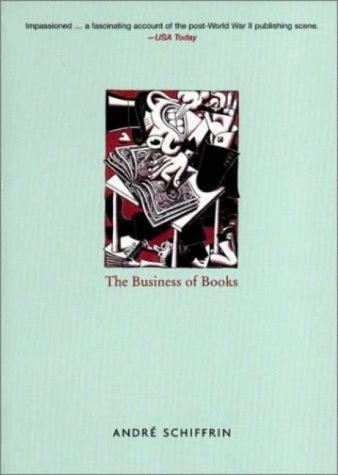
I have finally got round to reading André Schiffrin's excellent book on the impact business practices have had on publishing in the latter half of the Twentieth Century. This book is required reading for anyone who cares how knowledge is disseminated to the public. Market Censorship and Focus Groups effectively kill any ideas that appear fresh and new. It is only through independent publishing houses and booksellers that unique ideas and different perspectives on life are allowed the time of day. From my perspective, of working in college radio for 11+ years, the public needs access to varied arenas to nurture alternate views. Too often, people assume the only kind of music that's out there is played on the larger commerical stations. This kind of mass marketing of ideas and sounds crushes public taste by 'dumbing it down' and not allowing it to develop. People need to have the opportunity to gravitate towards sounds and ideas they prefer. It should be a fundamentally organic process, not something which is force fed to people. How can one determine what appeals to himself or herself if he or she does not have access to a variety of choices? People are effectively crippled if they cannot discuss matters sensibly. How can a person make an informed decision if he or she is denied information? André Schiffrin's book deals with all of these ideas by his personal journey through contemporary publishing. He has produced an essential text for studying the way the culture industry works.
********************
from the Verso website (www.versobooks.com)
The Business of Books: How the International Conglomerates took Over Publishing and Changed the Way We Read
André Schiffrin
Postwar American publishing has been ruthlessly transformed since André Schiffrin joined its ranks in 1956. Gone is a plethora of small but prestigious houses that often put ideas before prof it in their publishing decisions, sometimes even deliberately. Now six behemoths share 80% of the market and profit margin is all.
André Schiffrin can write about these changes with authority because he witnessed them from inside a conglomerate, as head of Pantheon, co-founded by his father bought (and sold) by Random House. And he can write about them with candor because he is no longer on the inside, having quit corporate publishing in disgust to setup a flourishing independent house, the New Press. Schiffrin's evident affection for his authors sparkles throughout a story woven around publishing the work of those such as Studs Terkel, Noam Chomsky, Gunnar Myrdal, George Kennan, Juliet Mitchell, R.D.Laing, Eric Hobsbawm and E.P. Thompson.
Part-memoir, part-history, here is an account of the collapsing standards of contemporary publishing that is irascible, acute and passionate. An engaging counterpoint to recent, celebratory memoirs of the industry written by those with more stock options and fewer scruples than Schiffrin, The Business of Books warns of the danger to adventurous, intelligent publishing in the bullring of today's marketplace.
"It is at once a riveting chronicle of the qualitataive rise and fall of the American reader and a very personal book." – Village Voice
"Andre Schiffrin is an old-fashioned New York publisher, the sort that loves and believes in books. Not just best-sellers, but little books with big ideas." – The Times
"André Schiffrin presents a sombre portrait of American publishing where the pursuit of profit has strangled alI creativity." – Nouvel Observateur
André Schiffrin was, for thirty years, Publisher at Pantheon. He is the Director of the New Press, which he founded in 1993. He contributes a regular column on publishing to the Chronicle of Higher Education.
Tuesday, July 19, 2005
Go Kart Mozart - Tearing Up the Album Charts
Go Kart Mozart
Tearing Up The Album Charts
BRUM2CD
Go Kart Mozart makes music in the style of brit-pop. The band hails from Birmingham and was founded by Lawrence Hayward. Their name comes from a line from the lyrics of Blinded by the Light, a song by Manfred Mann. Lawrence is primarily known for his work in the band Felt from the ‘80s. After the Felt years, he formed a pop band that lasted for three albums called Denim. His latest, Go Kart Mozart, has just released its second album “Tearing Up the Album Charts”. Lawrence is a bit of a cult figure in the UK music scene, having been referenced and praised by the likes of Pulp, Belle and Sebastian and St. Etienne, among other bands. He still remains kind of a misfit and a recluse.
“Tearing Up the Album Charts” captures his love of suburbia and pop music in an uncanny way. It is a clear homage to glam music of the ‘70s and carries on in a DIY appropriation of that style—all catchy guitar riffs and keyboard solos. One song on the album, 'Fuzzy Duck' is a litany of '60s and '70s obscure band names taking in Bacon Fat, Plastic Penny and Ultimate Spinach. This should ground the listener in the appreciation of trash culture that Lawrence revels in. He explores the jaded and empty spaces of suburbia through short pop songs that rarely exceed two minutes. The entire album lasts precisely 33 minutes, which is perfectly respectable for a pop disc. Most of the songs come from Lawrence’s personal experience as mediated through the prism of popular culture. That said, most of these songs deal with being unemployed and going out getting wasted on drugs. Crystal Meth abuse is the subject of “At the DDU”, while “Donna and The Dopefiends” has to do with the relationship he has with his female drug dealer. The interview at the bottom of this review mentions that the song “Transgressions” is about a trend for spraying Lynx body lotion on to your tongue for a cheap high. Lawrence also discusses ‘70s pop ephemera, the song, “Listening to Marmalade” regards the ‘70s band “Marmalade” in a fond light. An album like this is a nostalgic speed freak’s trip through the underside of decadent nowhere towns in the UK.
Interview:
http://www.guardian.co.uk/arts/homeentertainment/story/0,12830,1523239,00.html
Track Listing:
Glorious Chorus
Summer Is Here
Electric Rock & Roll
Listening To Marmalade
At The DDU
On A Building Site
Fuzzy Duck
Transgressions
Delta Echo Echo Beta Alpha Neon Kettle
Donna & The Dopefiends
England & Wales
City Centre
Tearing Up The Album Charts
BRUM2CD
Go Kart Mozart makes music in the style of brit-pop. The band hails from Birmingham and was founded by Lawrence Hayward. Their name comes from a line from the lyrics of Blinded by the Light, a song by Manfred Mann. Lawrence is primarily known for his work in the band Felt from the ‘80s. After the Felt years, he formed a pop band that lasted for three albums called Denim. His latest, Go Kart Mozart, has just released its second album “Tearing Up the Album Charts”. Lawrence is a bit of a cult figure in the UK music scene, having been referenced and praised by the likes of Pulp, Belle and Sebastian and St. Etienne, among other bands. He still remains kind of a misfit and a recluse.
“Tearing Up the Album Charts” captures his love of suburbia and pop music in an uncanny way. It is a clear homage to glam music of the ‘70s and carries on in a DIY appropriation of that style—all catchy guitar riffs and keyboard solos. One song on the album, 'Fuzzy Duck' is a litany of '60s and '70s obscure band names taking in Bacon Fat, Plastic Penny and Ultimate Spinach. This should ground the listener in the appreciation of trash culture that Lawrence revels in. He explores the jaded and empty spaces of suburbia through short pop songs that rarely exceed two minutes. The entire album lasts precisely 33 minutes, which is perfectly respectable for a pop disc. Most of the songs come from Lawrence’s personal experience as mediated through the prism of popular culture. That said, most of these songs deal with being unemployed and going out getting wasted on drugs. Crystal Meth abuse is the subject of “At the DDU”, while “Donna and The Dopefiends” has to do with the relationship he has with his female drug dealer. The interview at the bottom of this review mentions that the song “Transgressions” is about a trend for spraying Lynx body lotion on to your tongue for a cheap high. Lawrence also discusses ‘70s pop ephemera, the song, “Listening to Marmalade” regards the ‘70s band “Marmalade” in a fond light. An album like this is a nostalgic speed freak’s trip through the underside of decadent nowhere towns in the UK.
Interview:
http://www.guardian.co.uk/arts/homeentertainment/story/0,12830,1523239,00.html
Track Listing:
Glorious Chorus
Summer Is Here
Electric Rock & Roll
Listening To Marmalade
At The DDU
On A Building Site
Fuzzy Duck
Transgressions
Delta Echo Echo Beta Alpha Neon Kettle
Donna & The Dopefiends
England & Wales
City Centre
Wednesday, May 25, 2005
Arbol : dreams made of paper
ARBOL. dreams made of paper.
Arbol is multi-instrumentalist Miguel Marin's solo project. Prior to this, he worked as percussionist for the artists-collective known as Piano Magic. Arbol takes a lot of the quiet percussive combinations of electronic and acoustic sounds that Miguel used in his earlier work and builds on it. His work is simultaneously influenced by post-glitch electronica like Alva Noto and other artistis on the Raster-Noton label, and also by moody noirish film soundtracks. Arbol is at once sparse in texture and psychologically gripping. "dreams made of paper" is a clear progression form his prior self-titled debut as it collects work he composed on travels throughout Europe. Again, the delicate rhythm of the songs forms an intricate web that shelters the exquisite voices of Suzy Magnion and Eugenie Garreth. Both of the singers have a certain degree of depth to their voices. The lush melodic quality of their vocals plays against the electro-acoustic percussion to create songs of loss and awakening. I enjoy this album quite a bit because it utilizes the same fabric as the debut but develops the sound even more. Where the debut leant more towards the acoustic and found sounds, the new album feels slightly more electronic in parts. One of the later tracks feels like good IDM in the vein of Hermann and Kleine or Marc Leclair. Overall the new album has an embracing near mystical feel. It is a child's dream of loss and hope. Open your ears to Arbol's celebratory stories of the beauty and cruelty of nature.
I should perhaps mention the disc also has one of the best packaging ideas for a single compact disc I have ever seen. You lift up the tab of the white envelope that houses the disc and open it gently, four corners pushing into the center hold the disc in place at an angle, presenting it to the listener. The dark green words printed on each of the four corners pushing away from the center are the lyrics to the four songs that have words. The case is light, efficient and environmentally sound.
01 a bird’s day 02 dreams made of paper 03 bright day 04 reborn 05 0.13 06 moon shadowed 07 noga 08 0.26 09 not with you neither without you 10 november 11 little dancer 12 lost angel 13 golden section 14 too late to say goodbye
+ videoclip bright day
From the Lejos Discos press release:
Our first full length at Lejos had to be something special. For us, it is a dream come true. This new release is made of cardboard, paper, and 14 tracks that define the boundaries between ambient, electronica and soundtrack music.
“Dreams made of paper”, Miguel Marin’s second album as Arbol, is a melancholic work, motivated by the loss of someone dear. Yet it is also full of hope, full of life, as sunshine seeping through the leaves of trees to illuminate the darkest moments of life. One of the main virtues of this work by Arbol is the perfect combination of digital and natural resources. From the magnificent artwork by Queralt Antú Serrano –who has also made a videoclip inspired by the Spanish painter Salvador Dalí included in the CD- to the collaborations of Suzy Mangion (George) and Eugenie Garreth as singers, all the different pieces within “Dreams made of paper” shine in this particular path along a world of dreams.
Our third release, following up on the concept of “pop music for the open minded” that Lejos proposes, reflects all of Marin’s musical background, from his past in Piano Magic to his passion for electronic music, along with his collaborations with different movie directors such as Bigas Luna or Leo Obstbaum and also the famous French architect, Jean Nouvel.
Now that the work is done, with this new album for Lejos, Arbol is getting ready to present these new songs live in different formats (as DJ, alone with his laptop or with a band of up to 4 musicians). Miguel Marín already performed as Arbol at the Sonar 2003 festival.
Discography:
Arbol (Indus Sonica - Rocket Girl.2002)
Compilations:
“San Francisco” in Comes with a Smile #10 (2002)
“Summer and you” in Acuarela Songs vol. 3 (Acuarela.2004)
Links:
www.lejosdiscos.com
www.emiliirecords.co.uk
Arbol is multi-instrumentalist Miguel Marin's solo project. Prior to this, he worked as percussionist for the artists-collective known as Piano Magic. Arbol takes a lot of the quiet percussive combinations of electronic and acoustic sounds that Miguel used in his earlier work and builds on it. His work is simultaneously influenced by post-glitch electronica like Alva Noto and other artistis on the Raster-Noton label, and also by moody noirish film soundtracks. Arbol is at once sparse in texture and psychologically gripping. "dreams made of paper" is a clear progression form his prior self-titled debut as it collects work he composed on travels throughout Europe. Again, the delicate rhythm of the songs forms an intricate web that shelters the exquisite voices of Suzy Magnion and Eugenie Garreth. Both of the singers have a certain degree of depth to their voices. The lush melodic quality of their vocals plays against the electro-acoustic percussion to create songs of loss and awakening. I enjoy this album quite a bit because it utilizes the same fabric as the debut but develops the sound even more. Where the debut leant more towards the acoustic and found sounds, the new album feels slightly more electronic in parts. One of the later tracks feels like good IDM in the vein of Hermann and Kleine or Marc Leclair. Overall the new album has an embracing near mystical feel. It is a child's dream of loss and hope. Open your ears to Arbol's celebratory stories of the beauty and cruelty of nature.
I should perhaps mention the disc also has one of the best packaging ideas for a single compact disc I have ever seen. You lift up the tab of the white envelope that houses the disc and open it gently, four corners pushing into the center hold the disc in place at an angle, presenting it to the listener. The dark green words printed on each of the four corners pushing away from the center are the lyrics to the four songs that have words. The case is light, efficient and environmentally sound.
01 a bird’s day 02 dreams made of paper 03 bright day 04 reborn 05 0.13 06 moon shadowed 07 noga 08 0.26 09 not with you neither without you 10 november 11 little dancer 12 lost angel 13 golden section 14 too late to say goodbye
+ videoclip bright day
From the Lejos Discos press release:
Our first full length at Lejos had to be something special. For us, it is a dream come true. This new release is made of cardboard, paper, and 14 tracks that define the boundaries between ambient, electronica and soundtrack music.
“Dreams made of paper”, Miguel Marin’s second album as Arbol, is a melancholic work, motivated by the loss of someone dear. Yet it is also full of hope, full of life, as sunshine seeping through the leaves of trees to illuminate the darkest moments of life. One of the main virtues of this work by Arbol is the perfect combination of digital and natural resources. From the magnificent artwork by Queralt Antú Serrano –who has also made a videoclip inspired by the Spanish painter Salvador Dalí included in the CD- to the collaborations of Suzy Mangion (George) and Eugenie Garreth as singers, all the different pieces within “Dreams made of paper” shine in this particular path along a world of dreams.
Our third release, following up on the concept of “pop music for the open minded” that Lejos proposes, reflects all of Marin’s musical background, from his past in Piano Magic to his passion for electronic music, along with his collaborations with different movie directors such as Bigas Luna or Leo Obstbaum and also the famous French architect, Jean Nouvel.
Now that the work is done, with this new album for Lejos, Arbol is getting ready to present these new songs live in different formats (as DJ, alone with his laptop or with a band of up to 4 musicians). Miguel Marín already performed as Arbol at the Sonar 2003 festival.
Discography:
Arbol (Indus Sonica - Rocket Girl.2002)
Compilations:
“San Francisco” in Comes with a Smile #10 (2002)
“Summer and you” in Acuarela Songs vol. 3 (Acuarela.2004)
Links:
www.lejosdiscos.com
www.emiliirecords.co.uk
Monday, May 16, 2005
I love coffee
When I'm not brewing it at home, I usually stop by Peets Coffee (http://www.peets.com/) for a cup. Peets is one of the few places left that still brews a strong cup. So many places here in Boston, even the ones that aren't controlled by the ever pervasive chains, don't know how to make a good cup of coffee. I find this extremely disconcerting. It would seem that Americans are used to having weak brewed stuff that is more like flavored water than anything resembling coffee. They have grown up with this barely passable beverage and are unable to come to terms with something that contradicts their fixed taste. I do not know how to approach this problem in a gentle manner. I would like to tell the kids at some of the independent coffee houses around here how to properly make a nice full cup.
In my youth I traveled to the many locations of the magnificent "Coffee Connection". Sadly, alas, it is no more. George Howell has moved on to other ventures, the latest of which is his terroir coffee. (http://www.terroircoffee.com/) This website give you extensive information about brewing methods. Lately, I have been using Black Bear Coffee (http://www.blackbearcoffee.com/), which is roasted in New Hampshire. Black Bear Coffee yields a good flavorful cup. It is definately a cut above what is out there.
In my youth I traveled to the many locations of the magnificent "Coffee Connection". Sadly, alas, it is no more. George Howell has moved on to other ventures, the latest of which is his terroir coffee. (http://www.terroircoffee.com/) This website give you extensive information about brewing methods. Lately, I have been using Black Bear Coffee (http://www.blackbearcoffee.com/), which is roasted in New Hampshire. Black Bear Coffee yields a good flavorful cup. It is definately a cut above what is out there.
Thursday, May 05, 2005
Water, Inc. by Varda Burstyn
This excellent eco-thriller is a worthy antidote to the Michael Crichton-saturated science-thriller market. Varda Burstyn packages environmental consciousness in a popular genre format. When I read this book, there were time when I was torn between opposing thoughts that either this is the greatest book ever written or it is very good pulp fiction. Ms. Burstyn walks a tightrope skillfully between the two. I found the book exciting and fun. I didn't find Ms. Burstyn's woven polemics a distraction from the tale as the Guardian UK's review points out below, rather they are a vital element to the tale. I cannot wait for the next book in this series. I seriously hope her book encourages a new breed of contemporary socially-conscious thrillers.
What the Guardian UK had to say:
Water Inc., by Varda Burstyn (Verso, £12.99)
Yet another year of severe global warming drought, and water-starved America is burning up. Enter a group of unscrupulous megabillionaires headed by William Ericsson Greele, who have this cunning, secret $15bn plan to build a pipeline from Quebec to Ohio to pump trillions of gallons of water a year from Canada to the US. Luckily, a handful of environmentalist heroes get to hear of the plan and launch a huge "Eau No!" campaign. Greele and his greedy cronies are naturally not going to take this lying down, and they turn very nasty indeed - a journalist is shot, a man is burned to death in his house, a car is blown up, politicians are threatened. All of which have the makings of a cracking eco-thriller, except that the author, a lifelong environmental campaigner, never passes up an opportunity to give a lengthy lecture on a whole range of eco-issues. The result is a book that had great potential but is massively over-written and cluttered with too many characters, and an essentially exciting plot becomes mired in polemics.
Verso books:
http://www.versobooks.com/books/ab/b-titles/burstyn_water_inc.shtml
What the Guardian UK had to say:
Water Inc., by Varda Burstyn (Verso, £12.99)
Yet another year of severe global warming drought, and water-starved America is burning up. Enter a group of unscrupulous megabillionaires headed by William Ericsson Greele, who have this cunning, secret $15bn plan to build a pipeline from Quebec to Ohio to pump trillions of gallons of water a year from Canada to the US. Luckily, a handful of environmentalist heroes get to hear of the plan and launch a huge "Eau No!" campaign. Greele and his greedy cronies are naturally not going to take this lying down, and they turn very nasty indeed - a journalist is shot, a man is burned to death in his house, a car is blown up, politicians are threatened. All of which have the makings of a cracking eco-thriller, except that the author, a lifelong environmental campaigner, never passes up an opportunity to give a lengthy lecture on a whole range of eco-issues. The result is a book that had great potential but is massively over-written and cluttered with too many characters, and an essentially exciting plot becomes mired in polemics.
Verso books:
http://www.versobooks.com/books/ab/b-titles/burstyn_water_inc.shtml
Subscribe to:
Posts (Atom)


